
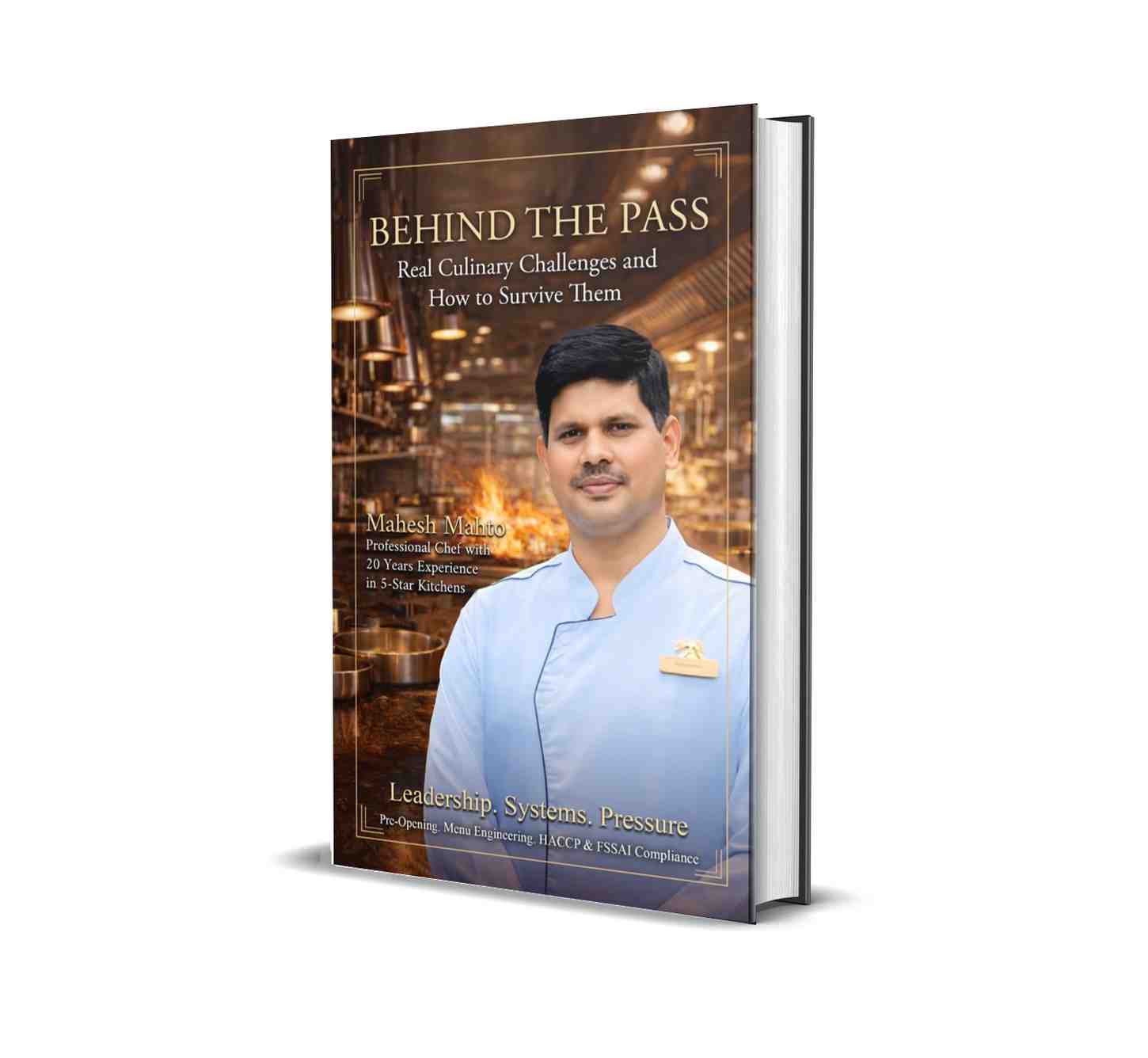
Behind every fast-paced kitchen is a psychological environment that directly influences performance. Stress, urgency, and pressure are constant companions in culinary operations.
Chef Mahesh Mahto explores how psychological factors shape kitchen behavior and outcomes more than many realize.

Stress as a Constant Variable
Unlike other workplaces, kitchens operate under continuous time pressure. Orders must be completed quickly, accurately, and consistently.
This creates a high-stress baseline that never fully disappears during service.
Cognitive Overload in Kitchens
During peak hours, chefs must:
- Read orders
- Prioritize tasks
- Coordinate with stations
- Maintain timing accuracy
This simultaneous demand creates cognitive overload, increasing the risk of mistakes.
Decision Fatigue
Repeated decision-making over long service periods leads to fatigue. As fatigue increases, speed and accuracy decline.
This is why structured systems are essential—they reduce unnecessary decision-making.
Emotional Contagion in Teams
Stress is not isolated. In kitchens, emotions spread quickly across teams. If one section becomes stressed, others often follow.
This is known as emotional contagion and is a major factor in kitchen instability.
The Importance of Mental Discipline
Mental discipline helps chefs maintain focus under pressure. It involves:
- Staying task-oriented
- Avoiding panic responses
- Following structured systems
- Maintaining communication clarity
Stress vs Performance Curve
A certain level of stress can improve performance by increasing alertness. However, beyond a point, stress reduces efficiency and increases errors.
The goal is to stay within an optimal performance range.
Leadership and Emotional Control
Leaders play a critical role in managing psychological pressure. Calm leadership reduces stress levels across the team and stabilizes performance.
Building Psychological Resilience
Resilience in kitchens is built through:
- Repetition under pressure
- Exposure to peak service simulations
- Structured workflows
- Clear expectations
Conclusion
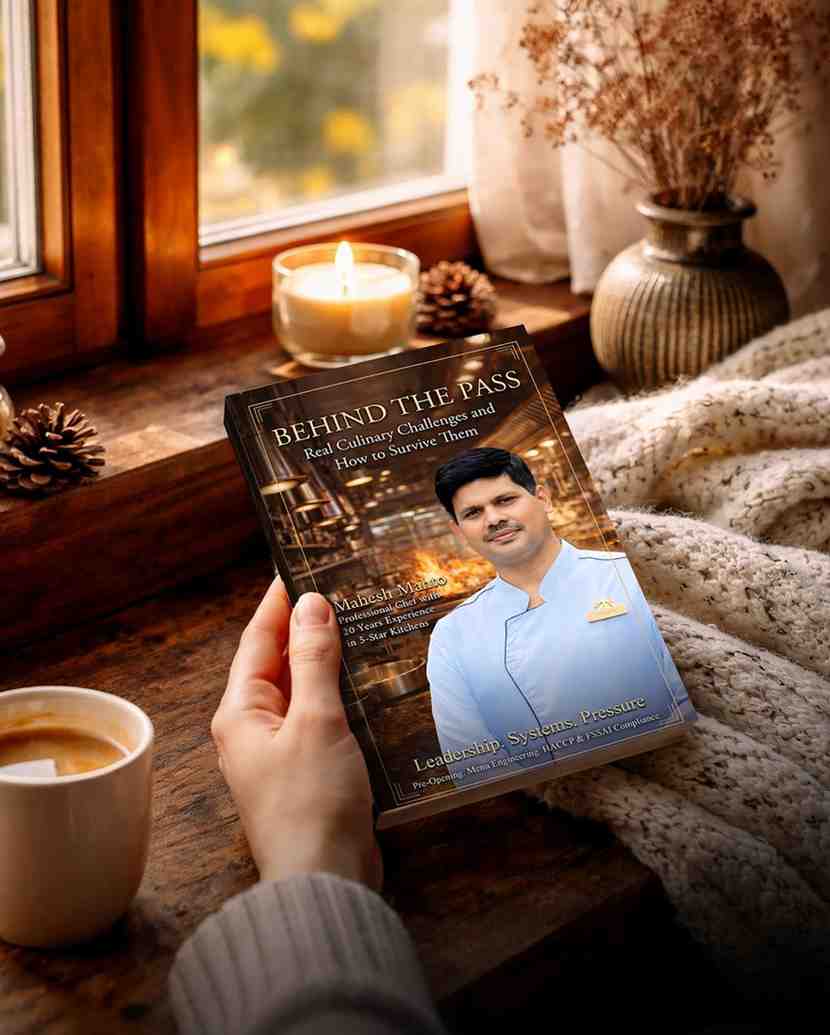
Kitchen performance is not just operational—it is psychological. Chef Mahesh Mahto emphasizes that understanding stress dynamics is essential for building stable, high-performing kitchens.
Media Coverage & External Links
Read the full feature:
Interview:
Also featured in The Literature Times:
Get Your Copy
The pass is open.
- Amazon — https://lnkd.in/gh__9vkJ
- Flipkart — https://lnkd.in/gVcFjHTa
- Astitva Store — https://lnkd.in/gpmc_vpp
- Classic Shelf — https://lnkd.in/g7_k4TpW